
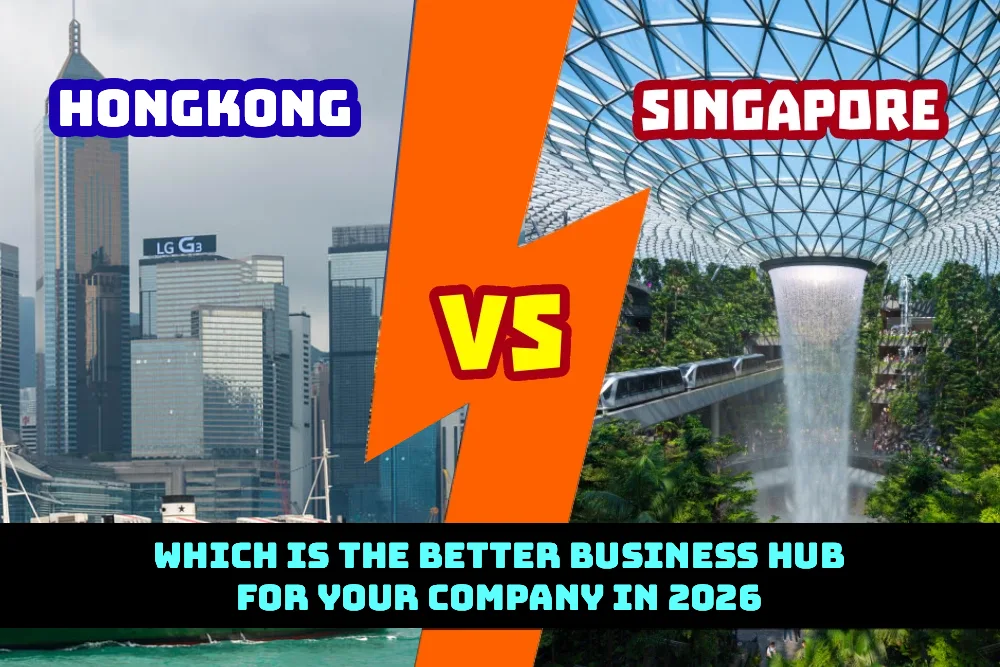
Moving a Hong Kong Company to Singapore: A Complete Guide for Businesses
As global business dynamics shift, many companies are reconsidering their regional headquarters. In recent years, Singapore has emerged as a preferred destination for businesses relocating from Hong Kong due to its stability, pro-business policies, and strong international reputation.
This guide explains why companies are making the move, key considerations, and the step-by-step process—along with how WLP can support a seamless transition.
Why Businesses Are Moving from Hong Kong to Singapore
Hong Kong has long been a leading financial hub, but evolving political and economic conditions have prompted companies to explore alternatives. Concerns around regulatory changes, talent migration, and rising operational costs have contributed to this shift.
Singapore, on the other hand, offers several compelling advantages:
- Stable political and legal environment
- Highly ranked ease of doing business
- Attractive corporate tax structure
- Extensive network of double tax treaties
- Strong access to ASEAN and global markets
These factors make Singapore an ideal base for regional and international expansion.
Can You Directly Transfer a Hong Kong Company to Singapore?
Unlike some jurisdictions, Hong Kong does not currently allow outward re-domiciliation. This means businesses cannot simply “move” their company registration to Singapore.
Instead, the typical approach involves:
- Incorporating a new Singapore entity
- Transferring assets, operations, and contracts
- Closing or retaining the Hong Kong company depending on strategy
Key Considerations Before Relocating
Relocating a company involves more than just registration. Businesses must carefully evaluate several factors:
- Business Structure
Decide whether to:
- Set up a Singapore parent company
- Create a Singapore subsidiary
- Maintain Hong Kong as a holding entity
Each structure has implications for tax, control, and compliance.
- Capital Requirements
Singapore allows companies to start with as little as SGD 1, but practical capital needs depend on:
- Hiring employees
- Securing business licenses
- Gaining trust from banks and partners
- Directors and Compliance
A Singapore company must have:
- At least one local resident director
- A company secretary
This is a critical compliance requirement for incorporation.
- Transfer of Assets and Liabilities
Businesses must plan the transfer of:
- Intellectual property
- Equipment and inventory
- Contracts and client agreements
These transfers must be done at fair value and may have tax implications.
- Workforce Relocation
If employees are relocating:
- Work passes (e.g., Employment Pass) are required
- Hiring rules may apply, especially for foreign employees
- Licensing and Operations
Certain industries require licenses before operating in Singapore. Businesses must also consider:
- Office space or facilities
- Supply chain adjustments
- Local market entry strategy
Step-by-Step Process to Move Your Business
Step 1: Choose the Right Structure
Determine whether your Singapore entity will act as a parent, subsidiary, or operational hub.
Step 2: Register a Singapore Company
Incorporate your company with the Accounting and Corporate Regulatory Authority (ACRA).
Step 3: Secure Work Passes
Apply for visas and permits for key personnel relocating to Singapore.
Step 4: Transfer Business Operations
Move assets, contracts, and operations to the new Singapore entity.
Step 5: Ensure Compliance
Set up accounting systems, tax registration, and regulatory compliance.
Step 6: Decide on Hong Kong Entity
Choose whether to:
- Maintain it for strategic reasons, or
- Deregister and close it to reduce costs
Benefits of Relocating to Singapore
Businesses that successfully relocate can enjoy:
- Access to a globally connected financial hub
- Lower corporate tax rates compared to many jurisdictions
- Strong government support and incentives
- A highly skilled and diverse workforce
Singapore’s ecosystem supports both startups and multinational corporations, making it a long-term strategic base.
How WLP Can Help
Relocating a company across jurisdictions is complex and requires careful planning. WLP provides end-to-end support, including:
- Company incorporation in Singapore
- Corporate structuring advice
- Accounting and tax compliance
- Employment pass application support
- Ongoing corporate secretarial services
With local expertise and a deep understanding of regulatory requirements, WLP ensures your transition from Hong Kong to Singapore is smooth, compliant, and efficient.
Conclusion
Moving a Hong Kong company to Singapore is a strategic decision that can unlock new growth opportunities. While the process involves multiple legal, financial, and operational considerations, proper planning and expert guidance can make the transition seamless.
Partnering with a trusted firm like WLP allows businesses to focus on growth while leaving the complexities of relocation to experienced professionals.