
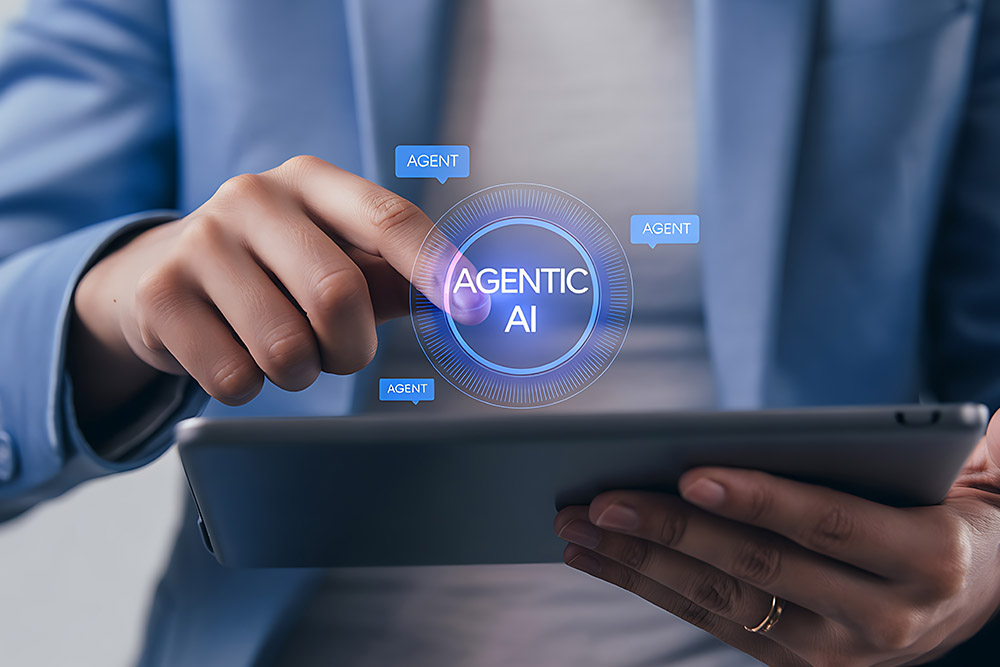
5 Types of Artificial Intelligence and How They Are Transforming Work and Daily Life in 2026
Introduction
Artificial Intelligence (AI) has become an integral part of modern life. From personalised recommendations on streaming platforms to intelligent virtual assistants and automated business processes, AI is changing how people live, work, and make decisions. In 2026, AI is no longer a futuristic concept—it is a practical technology that powers countless tools and services we use every day. AI adoption continues to accelerate across industries, helping organisations improve productivity, automate repetitive tasks, and deliver better customer experiences.
However, not all AI systems function in the same way. Different types of AI have different capabilities, ranging from simple rule-based systems to advanced concepts that researchers are still exploring. Understanding these categories can help individuals and businesses better prepare for the future of work.
In this guide, we explore the seven types of AI and their impact on everyday life in 2026.
What Is Artificial Intelligence?
Artificial Intelligence refers to computer systems designed to perform tasks that typically require human intelligence. These tasks include learning, reasoning, problem-solving, language understanding, pattern recognition, and decision-making. AI technologies are increasingly used in business, healthcare, education, finance, and marketing to improve efficiency and drive innovation.
The 5 Types of AI
- Reactive Machines
Reactive Machines are the most basic form of AI. These systems respond to specific inputs with predetermined outputs but do not store memories or learn from previous experiences.
Examples:
- Basic chess-playing computers
- Rule-based spam filters
- Simple recommendation engines
Impact on Daily Life:
Reactive AI powers many straightforward automation tools that help users complete routine tasks quickly and accurately. While limited in capability, these systems remain useful for repetitive processes.
- Theory of Mind AI
Theory of Mind AI represents the next stage of AI evolution. These systems aim to understand human emotions, intentions, beliefs, and social interactions.
Potential Applications:
- Advanced customer service
- Personalised education
- Healthcare support
- Human-like digital assistants
Impact on Daily Life:
Although still under development, Theory of Mind AI could dramatically improve communication between humans and machines by making interactions more natural and context-aware.
- Artificial Narrow Intelligence (ANI)
Artificial Narrow Intelligence focuses on performing specific tasks exceptionally well. Unlike humans, ANI cannot generalise knowledge across multiple domains.
Examples:
- Chatbots
- Image recognition tools
- Voice assistants
- AI writing tools
Impact on Daily Life:
ANI dominates today’s AI landscape. Businesses rely on these specialised systems to automate operations, analyse data, and enhance customer experiences.
- Artificial General Intelligence (AGI)
Artificial General Intelligence refers to AI capable of understanding and performing any intellectual task a human can do.
Current Status:
AGI remains under development and has not yet been achieved.
Potential Impact:
AGI could transform industries by combining reasoning, creativity, learning, and problem-solving into a single intelligent system capable of adapting to diverse situations.
- Artificial Superintelligence (ASI)
Artificial Superintelligence would exceed human intelligence across virtually all fields, including science, creativity, and decision-making.
Current Status:
ASI is still a theoretical concept and does not currently exist.
Potential Impact:
While ASI could solve some of humanity’s biggest challenges, it also raises significant ethical and governance questions regarding control, safety, and responsibility.
How AI Is Changing Work in 2026
AI is transforming workplaces across industries by automating repetitive tasks and enabling employees to focus on higher-value activities.
Key workplace benefits include:
- Faster data analysis and reporting
- Improved customer service through AI assistants
- Enhanced marketing and content creation
- Smarter business decision-making
- Increased operational efficiency
Rather than replacing human talent entirely, AI is increasingly being used as a productivity partner that supports creativity, strategic thinking, and innovation. Professionals who learn how to work alongside AI will be better positioned for future career opportunities.
The Future of AI Skills
As AI adoption continues to grow, demand for AI literacy, prompt engineering, automation, data analytics, and digital transformation skills is increasing. Businesses are actively seeking professionals who understand how to leverage AI responsibly and effectively. Practical AI knowledge is becoming a valuable advantage for career growth across industries.
Conclusion
The five types of AI demonstrate how diverse and powerful artificial intelligence has become. Understanding AI is no longer optional for professionals who want to stay competitive in a rapidly evolving digital economy. Whether you are a student, entrepreneur, marketer, or business leader, developing AI skills today can help you unlock new opportunities tomorrow.
Enrol at WLP Academy Today
Ready to future-proof your career with practical AI skills?
At WLP Academy, you’ll learn how to apply AI tools, automation strategies, and digital technologies to improve productivity, enhance decision-making, and stay ahead in an AI-driven world. Our industry-focused programmes are designed to equip learners with real-world skills that employers value.
Enrol at WLP Academy today and take the first step towards mastering the future of work.