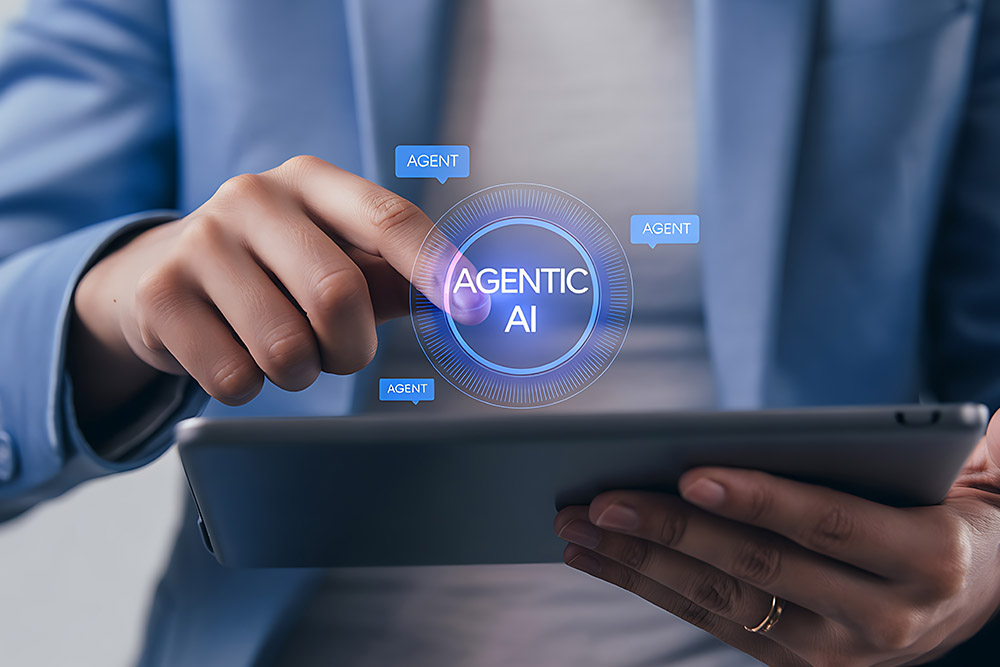
Building an AI-Native Organisation: Transforming Business Models, Teams and Leadership
Kevin
Business Insights
Building an AI-Native Organisation: Transforming Business Models, Teams and Leadership
Artificial intelligence is no longer simply a technology initiative for IT departments. Across Singapore and the wider Asia-Pacific region, organisations are exploring how AI can reshape the way they operate, serve customers, develop talent and create new sources of growth.But becoming an AI-native organisation involves much more than adopting ChatGPT, automation platforms or other AI tools. It requires businesses to rethink their operating models, workforce capabilities, leadership practices and approach to innovation.For organisations in Singapore, this shift presents both an opportunity and a challenge: how can businesses integrate AI into everyday work while ensuring that employees and leaders are equipped to use it effectively?
What Is an AI-Native Organisation?
An AI-native organisation is a business that incorporates artificial intelligence into the way it thinks, operates and creates value.Rather than treating AI as an isolated digital transformation project, an AI-native company considers AI across multiple areas, including:
Business strategy and decision-making
Customer experience
Product and service development
Operational efficiency
Workforce productivity
Talent development
Data-driven management
Leadership and organisational culture
The key difference is mindset.Traditional organisations may ask, “Where can we use AI?”AI-native organisations increasingly ask, “How should we redesign the way we work now that AI is available?”This distinction can have a significant impact on competitiveness.
Why Businesses Need to Rethink Their Business Models
AI can change more than individual tasks. It can influence how companies deliver products, interact with customers and generate revenue.For example, a professional services company may use AI to accelerate research and analysis. A retailer may introduce AI-powered personalisation. A training provider may use AI to create more responsive learning experiences. A financial organisation may use intelligent systems to support risk analysis and customer service.These applications can lead to a broader strategic question:If AI makes certain activities faster, cheaper or more scalable, should the business model itself change?Companies that focus only on automating existing processes may achieve efficiency gains. Organisations that redesign processes around AI have the potential to unlock entirely new ways of delivering value.
AI Is Changing the Workplace
One of the biggest misconceptions about AI transformation is that it is primarily about replacing people.In practice, the more important conversation for many organisations is how people and AI can work together.Employees may increasingly use AI as a:
Research assistant
Writing and communication partner
Data analysis tool
Brainstorming resource
Coding assistant
Customer-service support tool
Knowledge-management resource
Decision-support system
This means the future workplace is likely to place greater emphasis on human-AI collaboration.Employees will still need human capabilities such as judgement, creativity, communication, critical thinking, empathy and ethical decision-making. At the same time, they will need sufficient AI literacy to understand where AI can add value and where human oversight remains essential.
The Rise of AI-Literate Teams
Technology adoption alone does not create an AI-ready workforce.Businesses need people who understand how to apply AI to real business problems.AI literacy can include the ability to:
Identify suitable AI use cases
Write effective prompts and instructions
Evaluate AI-generated information
Recognise potential errors and biases
Protect confidential business information
Apply appropriate human oversight
Integrate AI into existing workflows
Measure the business impact of AI initiatives
For Singapore businesses, developing these capabilities can be particularly important as organisations compete in a highly digital and knowledge-intensive economy.The organisations that benefit most from AI may not necessarily be those with the most sophisticated technology. They may be those that successfully build the skills, culture and leadership capability needed to use that technology.
Leadership Must Evolve Alongside AI
AI transformation also changes the role of leadership.Leaders can no longer view AI as purely a technical decision delegated to specialists. Business leaders need to understand how AI may affect strategy, people, productivity, risk and competitive positioning.Effective AI leadership involves asking questions such as:
Which business problems should AI solve?
Where can AI create measurable value?
What capabilities will our workforce need?
What risks could AI introduce?
How should employees be trained?
How do we maintain human accountability?
How can we experiment with AI while managing governance?
Leaders also have an important role in creating a culture where employees feel encouraged to experiment responsibly.Without clear direction, AI adoption can become fragmented, with different teams using disconnected tools and approaches. With effective leadership, organisations can establish common objectives, governance principles and measurable outcomes.
From AI Adoption to AI Transformation
There is a significant difference between using AI tools and becoming an AI-enabled organisation.An employee using an AI chatbot to summarise a document represents AI adoption.An organisation redesigning its knowledge-management process so employees can find, analyse and act on information more efficiently represents AI transformation.The second approach requires deeper organisational change.Businesses should therefore consider AI across three interconnected levels:
Individual
Employees need practical AI skills that help them work more effectively.
Team
Teams need to redesign workflows and determine how humans and AI should collaborate.
Organisation
Leadership needs to align AI initiatives with business strategy, governance, culture and long-term growth.When these three levels develop together, AI becomes embedded into the organisation rather than remaining a collection of disconnected experiments.
Preparing the Workforce for an AI-Driven Future
Workforce development will be one of the most important components of successful AI transformation.Organisations should consider creating structured learning opportunities that help employees progress from basic AI awareness to practical application.A strong development pathway can cover:
AI fundamentals
Generative AI applications
Prompt engineering
AI-assisted productivity
Data and information evaluation
Responsible AI
AI strategy
Automation and workflow redesign
Leadership in an AI-enabled workplace
Training should also be practical. Employees need opportunities to apply AI to situations relevant to their actual roles rather than learning concepts in isolation.
Why AI Skills Matter for Singapore Businesses
Singapore has established itself as a major business, technology and innovation hub in Asia. As organisations accelerate digital transformation, AI capability is becoming increasingly relevant to employers and professionals across industries.From SMEs to multinational corporations, businesses can benefit from developing employees who are confident in using emerging technologies responsibly.For professionals, developing AI capabilities can also help strengthen career resilience. The ability to work effectively with AI may increasingly become a valuable complement to existing functional expertise.The goal is not simply to become an AI specialist.It is to become a professional who understands how AI can improve the work, decisions and outcomes associated with their role.
The Human Side of AI Transformation
Technology may enable transformation, but people determine whether transformation succeeds.Organisations introducing AI need to consider employee engagement, communication and change management. People may have concerns about job security, changing responsibilities or the reliability of AI-generated outputs.Leaders should address these concerns openly and explain how AI will be introduced.A successful AI culture should encourage experimentation while maintaining appropriate safeguards.Employees should understand that AI is a tool to augment human capability—not a substitute for accountability, professional judgement and ethical responsibility.
Building an AI-Ready Organisation Starts Today
The transition towards an AI-native organisation will not happen through a single software implementation or one-off training session.It is an ongoing process involving strategy, skills, leadership and organisational learning.Businesses that start building AI capability today can put themselves in a stronger position to respond to technological change. More importantly, they can empower their people to participate actively in that transformation.Whether you are a business leader, HR professional, manager or working professional, developing practical AI capabilities can help you navigate the changing workplace with greater confidence.
Enrol in WLP Academy Today
Ready to strengthen your leadership and professional capabilities for the AI-driven workplace?Enrol in WLP Academy today and take the next step towards developing the knowledge, skills and mindset needed to thrive in a rapidly changing business environment.Investing in continuous learning today can help you and your organisation stay prepared for tomorrow’s opportunities.
Frequently Asked Questions
What is an AI-native organisation?An AI-native organisation integrates artificial intelligence into business strategy, workflows, decision-making and value creation rather than treating AI as a standalone technology project.Why is AI important for businesses in Singapore?AI can help Singapore businesses improve productivity, enhance customer experiences, automate repetitive processes and develop new approaches to products and services. It also creates a growing need for AI-skilled professionals.What skills do employees need for an AI-enabled workplace?Important capabilities include AI literacy, critical thinking, prompt development, information evaluation, digital collaboration, problem-solving and responsible use of AI.Does becoming AI-native mean replacing employees with AI?Not necessarily. A major opportunity is to use AI to augment human capabilities, allowing employees to focus more on judgement, creativity, relationship-building, strategic thinking and complex problem-solving.How can leaders prepare their organisations for AI?Leaders can begin by identifying high-value AI opportunities, developing workforce capabilities, establishing responsible-use guidelines and encouraging teams to experiment with AI while maintaining appropriate human oversight.Where can professionals develop AI and leadership capabilities?Professionals can explore structured learning and leadership development programmes such as WLP Academy to build relevant capabilities for the evolving workplace.